


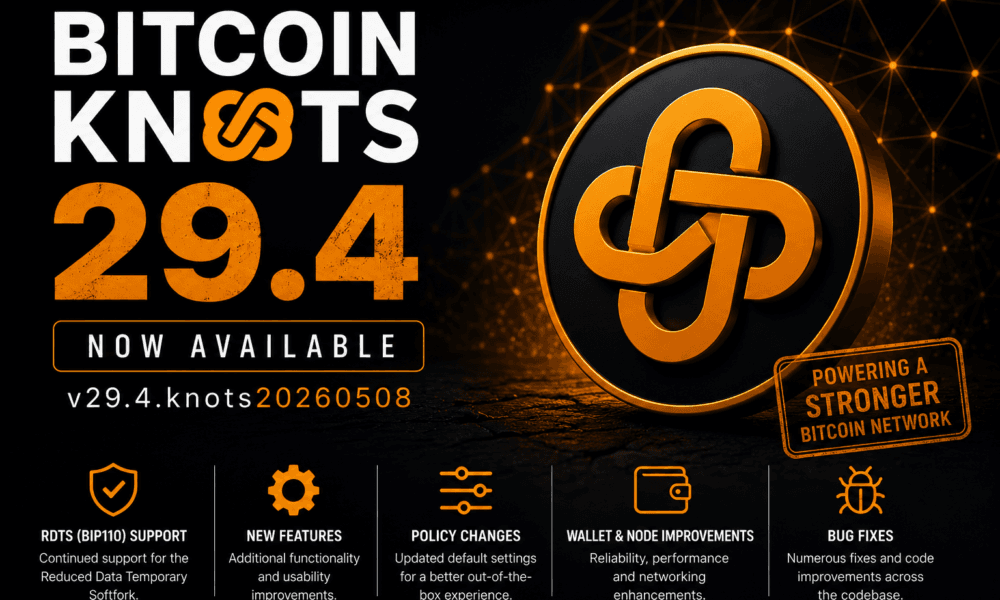
The latest version of Bitcoin Knots (v29.4) is now available. The release introduces new functionality, several policy changes, numerous bug fixes, and continued work surrounding the proposed Reduced Data Temporary Softfork (RDTS / BIP110).
For users running Bitcoin Knots as their primary node software, this is one of the more significant releases in recent months.
Table Of Content
What Is Bitcoin Knots?
Bitcoin Knots is an alternative implementation of the Bitcoin node software maintained by Luke Dashjr. It is based on Bitcoin Core but includes additional features, configurable policy options, and experimental functionality that appeal to advanced users and node operators.
While Bitcoin Core remains the reference implementation, Bitcoin Knots has become increasingly popular among users who prefer greater control over their node’s relay and mempool policies.
RDTS (BIP110) Support
The headline feature of this release is continued support for the Reduced Data Temporary Softfork (RDTS), also known as BIP110.
According to the release notes, this proposal is intended to address long-standing network design issues related to data usage and spam. Because activating such a change affects network behaviour, Bitcoin Knots requires explicit user confirmation before enabling it.
As always, node operators should understand the implications of any proposed soft fork before choosing to participate.
New Features
Beyond RDTS, Bitcoin Knots 29.4 introduces a variety of usability improvements and additional functionality. The focus remains on giving node operators more flexibility while maintaining compatibility with the Bitcoin network.
Default Configuration Changes
Several default configuration values have been updated in this release.
These changes are designed to improve the default user experience while keeping Bitcoin Knots aligned with its philosophy of giving operators more direct control over node policy. Users with custom configuration files should review the release notes to determine whether any settings require attention after upgrading.
Wallet and Node Improvements
Like most maintenance releases, version 29.4 includes numerous improvements throughout the codebase, including:
- Wallet reliability improvements
- Networking enhancements
- Performance optimizations
- Build system updates
- Developer tooling improvements
- Various bug fixes
While many of these changes are not immediately visible to end users, they contribute to a more stable and reliable Bitcoin node.
Should You Upgrade?
If you’re already running Bitcoin Knots, upgrading to version 29.4 is recommended.
As with any node software update:
- Back up your wallet.
- Verify downloaded binaries and signatures.
- Read the release notes carefully, especially if you plan to experiment with RDTS/BIP110.
- Review your configuration after upgrading.
Final Thoughts
Bitcoin Knots continues to position itself as a feature-rich alternative to Bitcoin Core for users who want greater control over node policy and network behaviour.
Although much of this release focuses on maintenance and incremental improvements, the continued development around RDTS/BIP110 ensures that Bitcoin Knots remains at the center of ongoing discussions about Bitcoin’s relay policy and future network upgrades.
Whether or not users choose to enable the experimental features, version 29.4 delivers a solid collection of improvements that make it a worthwhile upgrade for existing Knots users.
Download
Download Bitcoin Knots v29.4

René
Editor