

A new proposal in the Bitcoin ecosystem, Bitcoin Improvement Proposal 110 (BIP-110), has sparked debate about how the Bitcoin network should be used and what its primary purpose should be.
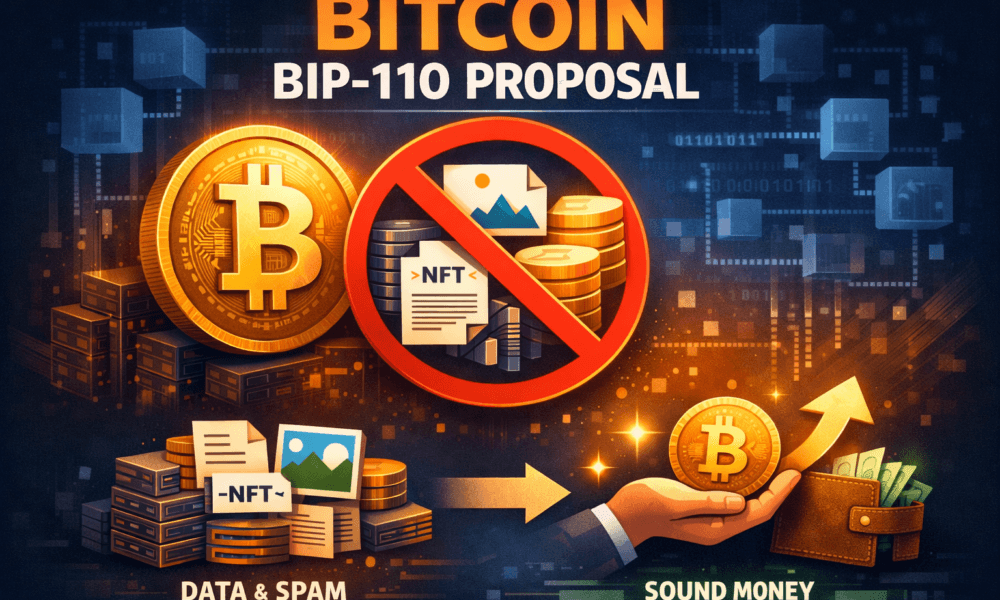
BIP-110 proposes a temporary consensus soft fork designed to limit the amount of arbitrary data that can be stored inside Bitcoin transactions. The change would run for roughly one year and aims to reduce non-financial uses of the blockchain, such as embedding images, tokens, or other large data files in transactions.
The proposal emerged after a surge in “inscriptions” and similar techniques that embed large amounts of data into the Bitcoin blockchain. Supporters argue that these uses increase storage and bandwidth requirements for node operators and drive up transaction fees without contributing to Bitcoin’s main function as a payment network.
Under BIP-110, new limits would be introduced at the protocol level. For example, transaction outputs would be capped at 34 bytes, while the OP_RETURN field (commonly used to store metadata) would be limited to 83 bytes. The proposal would also limit individual data pushes and witness elements to 256 bytes.
Supporters believe these restrictions would reduce blockchain “spam,” lower resource requirements for running a node, and help keep Bitcoin focused on its role as sound, permissionless money.
However, the proposal has also drawn criticism. Some developers and industry figures argue that introducing consensus-level limits to stop data usage could set a precedent for restricting how people use Bitcoin and might risk splitting the network if consensus is not reached.
Although still a proposal, BIP-110 highlights an ongoing tension within the Bitcoin community: whether the network should remain strictly a monetary system or evolve into a broader platform for data and applications. How the debate unfolds could shape the future direction of Bitcoin development.
Find more info about this topic on the BIP 110 proposal site.
Or check out the video’s from Bitcoin University where they regularly talk about BIP 110.

René
Editor