Bitcoin might be one of the strangest financial assets ever created. It produces nothing, pays nothing, and owns nothing. Yet it trades around $70,000 and does not seem to bother the current uncertain situation in our world. In traditional finance, that should make no sense at all.
Stocks generate earnings. Bonds pay interest. Real estate produces rent. Even gold has industrial and decorative uses. Bitcoin has none of these. It is, in the purest sense, an empty asset -> a digital object with limited supply, secured by cryptography and maintained by a decentralized network.
And yet that emptiness may be exactly why it matters.
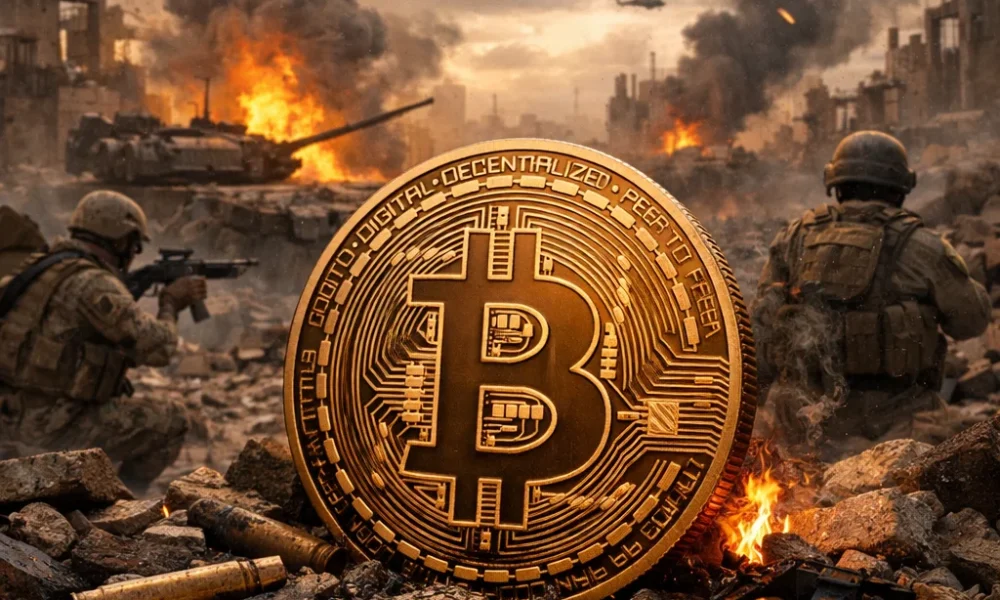
In a world where almost everything is tied to institutions, policies, and human decision-making, Bitcoin stands apart. Governments can inflate currencies. Central banks can manipulate interest rates. Corporations can misreport earnings. Entire financial systems can be reshaped overnight by political decisions.
Bitcoin does not care. Its rules are fixed in code. Its supply is capped at 21 million. No central authority can print more of it or change its schedule without global consensus across its network.
That simplicity is powerful.
Critics often argue that Bitcoin has no intrinsic value. But that critique misses the point. Bitcoin’s value does not come from cash flow or productivity, it comes from credibility. In a world where trust in institutions is constantly tested, a system that simply runs according to transparent rules becomes attractive.
It does not belong to any government. It cannot be controlled by any corporation. It operates 24/7 across borders and political systems. For many people, that independence is the asset.
Whether that ultimately justifies a $70,000 price is still up for debate. But Bitcoin has already forced the financial world to confront an uncomfortable possibility:
‘Value does not always come from productivity.
Sometimes, it comes from belief in a system that cannot be easily changed.
And right now, millions of people believe in Bitcoin.’

René
Editor