


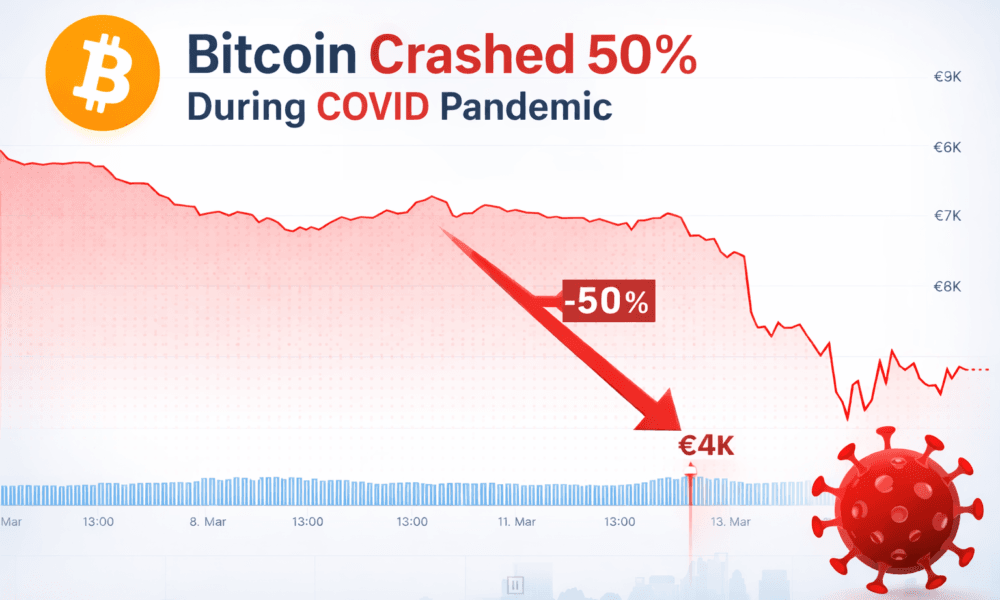
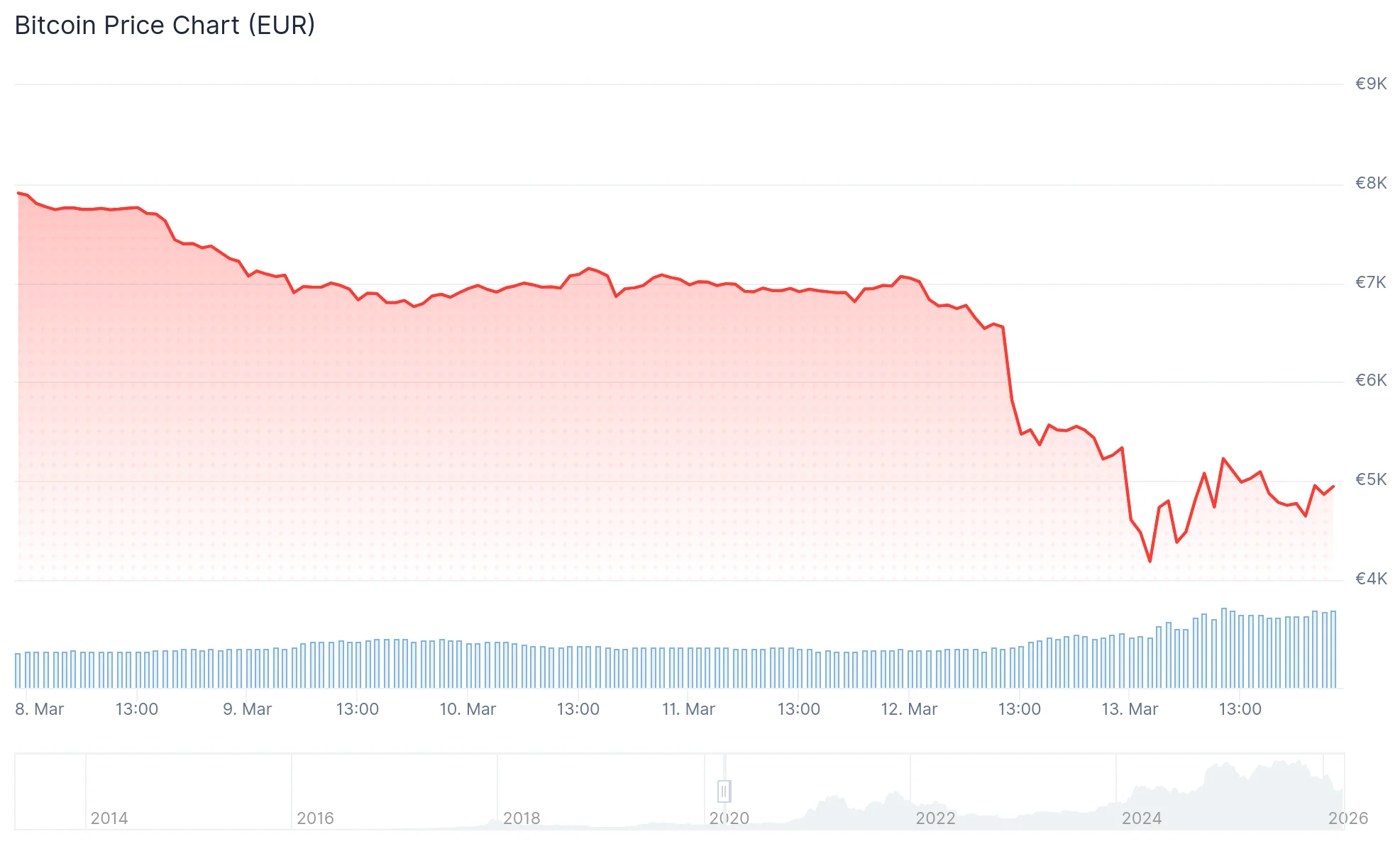
Exactly six years ago today, on March 13, 2020, the Bitcoin market experienced one of the most dramatic crashes in its history. In less than 48 hours, the price of Bitcoin fell by nearly 50%, dropping from around $8,000 to below $4,000.
Table Of Content
The crash was not caused by a flaw in Bitcoin itself. Instead, it was part of a global financial panic triggered by the rapid spread of COVID-19 and the sudden shutdown of economies worldwide.
Looking back today, this moment provides an important perspective on Bitcoin’s resilience and what it may signal for the current market environment.
The Global Panic That Triggered the Crash
In early March 2020, financial markets around the world began collapsing as the COVID-19 pandemic spread across Europe and the United States. Governments started announcing lockdowns, businesses shut down overnight, and investors rushed to sell risky assets.
Bitcoin, still widely seen as a speculative asset at the time, was caught in the same wave of panic selling.
Within hours:
- Global stock markets plunged
- Oil prices collapsed
- Investors rushed to cash
- Crypto exchanges experienced record liquidations
On March 12–13, massive leveraged positions on crypto derivatives exchanges were liquidated, accelerating the selloff. Bitcoin briefly traded below $4,000, marking one of the sharpest crashes in its history.
Why Bitcoin Fell So Hard
Several factors amplified the drop.
1. Liquidity Crisis
During the early days of the pandemic, investors sold almost everything like stocks, gold, and cryptocurrencies to move into cash. Bitcoin was not yet widely viewed as a safe haven, so it was sold alongside other risk assets.
2. Leveraged Liquidations
Crypto markets in 2020 had significant leverage. When prices started falling, automated liquidations triggered cascading sell orders across exchanges, accelerating the crash.
3. Infrastructure Stress
Some exchanges struggled to handle the extreme trading volume. Temporary outages and slow order books added to the chaos.
What Happened After the Crash
The surprising part of the story is what came next.
After bottoming near $3,800, Bitcoin began a slow recovery. Within months, global central banks launched unprecedented monetary stimulus to stabilize the economy.
The result:
- Massive money printing
- Near-zero interest rates
- Rising inflation concerns
These conditions created a perfect environment for Bitcoin’s narrative as “digital gold.”
Over the following year, Bitcoin entered one of the strongest bull markets in its history, eventually reaching new all-time highs in the next years.
What We Learned From This Crash
Six years later, the events of March 2020 offer several important lessons for today’s market.
Bitcoin Can Experience Extreme Volatility
Even though Bitcoin has matured significantly, the Black Thursday crash reminds investors that sharp corrections are always possible. Market sentiment can change quickly during global crises.
Bitcoin Has Become More Resilient
Since 2020, the ecosystem has grown dramatically:
- Institutional participation has increased
- Custody solutions have improved
- Market infrastructure is stronger
- Global awareness of Bitcoin has expanded
Today’s market is far larger and more liquid than it was in 2020.
Macro Events Still Matter
The crash also showed that Bitcoin does not exist in isolation. Global economic events like interest rates, liquidity, and financial stress still influence the price.

René
Editor